










Hvar Marina & Pakleni Islands
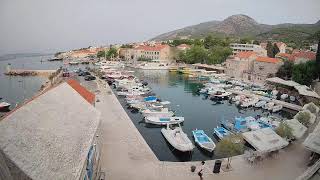
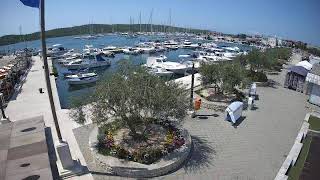
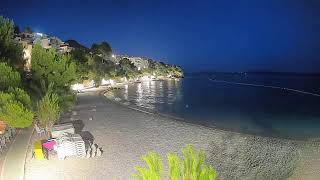
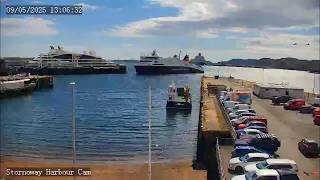
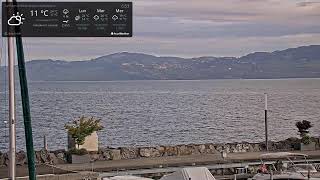
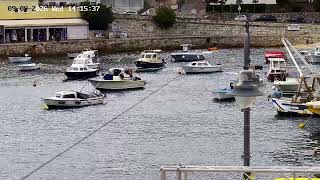
This live stream shows Hvar Harbour on the island of Hvar, Croatia. The webcam is positioned overlooking the entrance to Hvar Port and the surrounding waterfront, with a clear view toward the channel leading out to the Pakleni Islands. It captures continuous real-time activity including boats entering and leaving the harbour, ferry movements, and changing traffic around the marina. The camera overlooks one of the main coastal areas of Hvar Town, near the promenade and close to the Franciscan Monastery. From this angle you can see the harbour basin, moored vessels, and open water beyond the port entrance where sailboats and ferries pass through the channel between the island and the offshore archipelago. Hvar is known for its historic old town, active marina, and sheltered harbour surrounded by limestone hills and clear Adriatic waters. Conditions in the bay often shift throughout the day, with calm morning waters, increasing boat activity in peak hours, and sunset departures heading toward nearby islands and sailing routes.
Hvar, Split-Dalmatia, Croatia
 HR
HR- Hvar Island
- Pharia
- Lesina, Croatia
Hvar is a Croatian island situated in the Adriatic Sea off the Dalmatian coast within Split-Dalmatia County. It lies between the islands of Brač, Vis, and Korčula, with its eastern end only six kilometres from the mainland. The island features a high east-west ridge of Mesozoic limestone and dolomite, unusual for having a large fertile coastal plain and fresh water springs. Administratively, it comprises two towns, Hvar and Stari Grad, and two municipalities, Jelsa and Sućuraj.
The island has been inhabited since prehistoric times by Neolithic people and later the Illyrians. In 384 BC, ancient Greeks founded the colony of Pharos at present-day Stari Grad, establishing one of Croatia's oldest towns and setting out the agricultural field divisions of the Stari Grad Plain. This plain is now a UNESCO World Heritage Site. The island subsequently passed through Roman, Byzantine, Venetian, Napoleonic, and Austrian rule before becoming part of modern Croatia.
The landscape is characterized by karst terrain with pine forests, vineyards, olive groves, and lavender fields. Hvar Town features marble streets, the Cathedral of St. Stephen, and a Renaissance theatre, while imposing fortifications overlook the harbour. Stari Grad serves as the main seaport and retains ancient Greek agricultural divisions. The island's highest peak is Sv. Nikola at 628 metres, and its coastline stretches for 254.2 kilometres along the southern and eastern shores.
Tourism is a significant contributor to the economy, with infrastructure developed by the Hygienic Association of Hvar in 1868. The island attracts visitors for its history, culture, and natural beauty, consistently ranking among top islands in Conde Nast Traveler magazine. Visitors explore museums, galleries, and cafés, while enjoying the mild climate and warm summers. The area around Stari Grad Plain remains a distinctive example of ancient Greek agricultural development.
According to the 2021 census, Hvar has 10,678 residents, making it the fourth most populated Croatian island. The economy relies on tourism, wine exports, and lavender production for the French perfume industry. Access is via car ferries from Split to Stari Grad or Drvenik, and fast ferries to Hvar Town. The climate is hot-summer Mediterranean with 2,800 sunshine hours annually, featuring mild winters and warm summers ideal for visiting between May and September.
 The EARF Engine