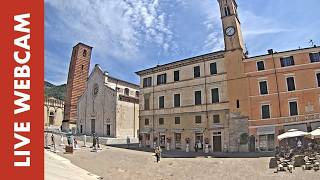











Orvieto, Terni, Italy
 IT
IT- Urbs Vetus
Orvieto is a city and comune located in the Province of Terni within southwestern Umbria, Italy. It sits on the flat summit of a large butte composed of volcanic tuff, rising dramatically above almost-vertical cliffs of the same stone. The natural geography is completed by defensive walls built from this local rock, creating an impregnable setting that has defined the city's physical presence for centuries.
The settlement originated as the Etruscan city of Volsinii, one of the twelve cities of the Etruscan Confederation and a capital of Etruria. After being subdued by Rome in 280 BC, the ancient city was destroyed and a new Volsinii established at modern Bolsena. The name Orvieto derives from the Latin Urbs vetus, meaning old city, first appearing in Procopius to distinguish it from the new Roman settlement.
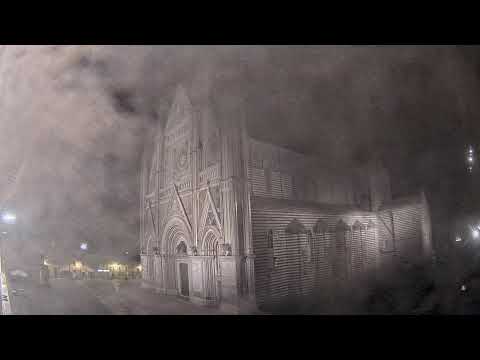
The medieval quarter and walled city offer significant architectural heritage, including the Duomo di Orvieto, a black and white striped cathedral constructed in the 13th and 14th centuries in mixed Romanesque and Gothic styles. Other notable sites include Saint Patrick's well, La Cava well, and churches dedicated to Saint Giovenale, Saint Giovanni, and Saint Francesco. The city also features the Albornoz rock and surrounding promenade.
Orvieto holds cultural significance as the site of the 1263 miracle of Bolsena, which led Pope John XXII to institute the first Corpus Christi procession in the city in 1316. The town attracts visitors through its historic Piazza del Duomo and Piazza della Repubblica, offering access to museums and tourist information. Its medieval history and religious associations draw people interested in its complex past involving Guelph and Ghibelline conflicts.
The population of Orvieto was 19,461 as of 2023. Access is facilitated by the Orvieto railway station at Orvieto Scalo, with daily trains to Florence, Chiusi, and Rome, alongside frequent buses to Rome, Viterbo, and Perugia. Visitors can reach the upper town via a funicular railway or public buses, while the A1 autostrada provides car access, though parking in the historic center is limited.
 The EARF Engine