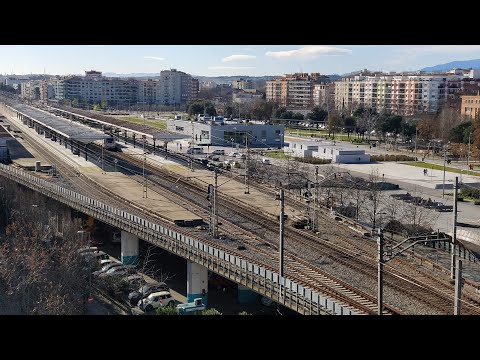


Girona, Spain
 ES
ES- Gerona
- Gérone
Girona serves as the capital city of the Province of Girona within the autonomous community of Catalonia, Spain. Situated at the confluence of the Ter, Onyar, Galligants, and Güell rivers, it occupies a strategic location along a natural corridor connecting the Empordà plain to the Catalan Coastal Depression. This position links the Costa Brava and France with Barcelona and other southern population centers. The city also functions as the capital of the Gironès comarca and the vegueria of Girona, anchoring the region's administrative and geographic framework.
The area was first inhabited by Iberians, with Girona identified as the ancient Roman city of Gerunda, a settlement of the Ausetani tribe. Charlemagne reconquered the site in 785, incorporating it into Catalonia, though it endured numerous sieges by Moors and French armies over centuries. The Jewish community flourished from the 12th century until its expulsion in 1492. Following the Peninsular War, western city walls were demolished for expansion, while eastern fortifications were reconstructed between 1983 and 2003, preserving much of the ancient urban fabric.
The old town rests on the steep Caputxins hill east of the Onyar river, featuring preserved medieval streets and Art Nouveau architecture like the Farinera Teixidor. Key landmarks include the Catalan Gothic cathedral with its wide stone vault and ninety-step approach, and the Collegiate Church of Sant Feliu with its genuine spire. The Benedictine monastery of Sant Pere de Galligants represents early Romanesque style. The reconstructed eastern city walls offer panoramic views via the Passeig de la Muralla walking route.
Girona is a popular tourist destination for day-trippers from Barcelona, drawn by its fascinating ancient history and well-preserved heritage sites. Visitors explore the higgledy-piggledy medieval streets, the Jewish Call district, and the vibrant Plaça de la Independència. The city attracts pilgrims and sun-seekers alike, leveraging its proximity to the Costa Brava beaches. Its cultural appeal is enhanced by the contrast between the historic old quarter and the modern grid of the New Town to the west.
The city had an official population of 106,476 in 2024, with the broader Girona–Salt urban area estimated at about 156,400 in 2020. It is accessible via Girona Airport, served primarily by Ryanair, and connected by high-speed trains and buses from Barcelona. The climate is humid subtropical, featuring hot summers and cool winters with frequent frost. While summer temperatures can soar, the wettest seasons are autumn and spring, making it an all-year destination despite occasional cold mountain winds.
 The EARF Engine



![[公式]スターキャット thumbnail](https://yt3.ggpht.com/HctH3nbthpSnqkSmip0mKd58sfF8jrSu-3nQQPGjNXZrZ6-M1aWifq38wUMqEBgM31B8Qz08=s800-c-k-c0x00ffffff-no-rj)