
Mount Križevac Trail
Medjugorje Today Live
33.8K subscribers
Međugorje, Herzegovina-Neretva, Bosnia and Herzegovina

Mount Križevac Trail
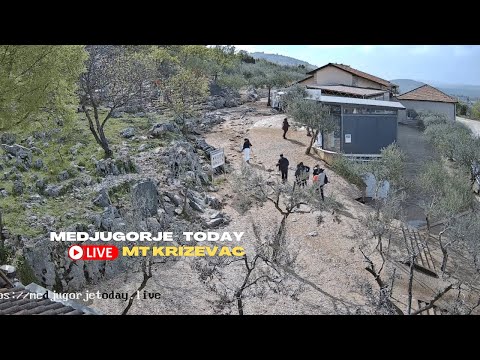
This live stream provides a view of the Mount Križevac trail above Međugorje, Bosnia and Herzegovina. The camera overlooks the rocky mountain path leading toward the summit, with the surrounding karst landscape and vegetation visible along the trail. Mount Križevac rises above Međugorje and is known for the large white cross erected at its summit in 1933. The trail is followed by pilgrims and visitors climbing the mountain, with the Stations of the Cross positioned along the route and the summit providing views across the surrounding Herzegovina countryside. The live view captures conditions along the trail and the activity of people making their way toward Križevac, with the appearance of the landscape changing with daylight and weather.
Međugorje, Herzegovina-Neretva, Bosnia and Herzegovina
 BA
BA- Međugorje
- Medjugorje
Međugorje is a village in the Herzegovina-Neretva Canton of Bosnia and Herzegovina, located in the western part of the country near the city of Čitluk. The settlement lies among the low, rocky hills and agricultural landscapes of Herzegovina, a region characterized by a Mediterranean-influenced climate, limestone terrain, vineyards, orchards and dry hillsides. Its position between Mostar and the Adriatic coast places Međugorje within a landscape where inland Herzegovina meets the broader cultural and geographic influences of the eastern Adriatic.
Međugorje became internationally known following reports of apparitions of the Virgin Mary by local children beginning in 1981. The reported events transformed what had previously been a small rural settlement into a major destination for Catholic pilgrims from Bosnia and Herzegovina and around the world. Although the apparitions and their supernatural claims remain a matter of religious belief and ongoing ecclesiastical consideration, the village has developed a significant religious tourism infrastructure around the pilgrimage tradition.
St. James Church is the central landmark of Međugorje and forms the focus of much of the village's religious activity. The church and its surrounding grounds accommodate large numbers of pilgrims, particularly during religious celebrations and major pilgrimage periods. Services, prayer gatherings and other religious activities take place throughout the year, while the area around the church contains pathways, gathering spaces and facilities serving visitors from many different countries.
Two nearby hills are particularly associated with the pilgrimage landscape. Apparition Hill, known locally as Podbrdo, is traditionally associated with the reported early apparitions and is reached by a rocky walking path marked by religious symbols and stations for prayer. Cross Mountain, or Križevac, rises above the surrounding countryside and is dominated by a large white cross erected in 1934. The climb provides views across Međugorje, the surrounding villages and the limestone hills of Herzegovina.
Beyond its religious significance, Međugorje is surrounded by the characteristic landscapes of western Herzegovina. Vineyards, tobacco fields, orchards and small agricultural holdings occupy areas between rocky hills and settlements, while the region's dry climate supports vegetation adapted to warm summers and relatively limited rainfall. The nearby Neretva Valley and surrounding karst landscapes contain a mixture of fertile agricultural areas, rugged limestone terrain and historic settlements.
Međugorje's international profile has contributed significantly to the local economy, with accommodation, restaurants, shops, visitor services and pilgrimage facilities forming an important part of the village's modern character. Visitors arrive throughout the year, with particularly large gatherings during major Catholic observances. The village therefore combines the appearance of a Herzegovinian rural settlement with infrastructure shaped by decades of international pilgrimage.
Today, Međugorje is one of the most internationally recognized pilgrimage destinations in the Balkans. Its religious landmarks, surrounding hills and distinctive Herzegovinian landscape form a closely connected environment, while the village's location near Čitluk and the wider Neretva region provides access to the historic, cultural and natural attractions of southern Bosnia and Herzegovina.
 The EARF Engine