
Market Square
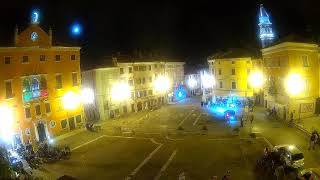
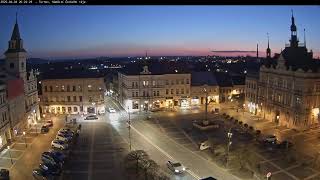
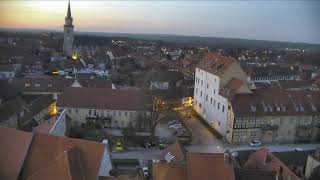
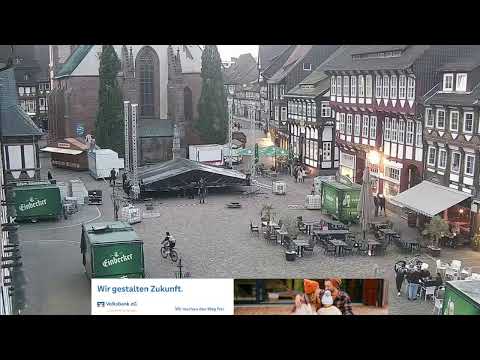
This live camera shows the Marktplatz Einbeck (Market Square) in the town of Einbeck, Lower Saxony, Germany. The view frames a broad cobblestone square lined with richly-timbered half-timbered houses and cafés, centred on the historic Altes Rathaus Einbeck (Old Town Hall) from the 16th century and a classic fountain in front. To one side a tall church spire of St. Jakob Church (Einbeck) punctuates the skyline, offering a serene, real-time window into this charming medieval town centre.
Einbeck, Lower Saxony, Germany
 DE
DE- Aimbeck
- Eimbeck
Einbeck is a historic town situated in the district of Northeim within southern Lower Saxony, Germany. It lies on the German Timber-Frame Road, positioned directly south of the Hube hills where the Ilme river flows into the Leine. Geographically, it is located between the Harz mountains and the Weser Uplands, approximately 30 kilometers north of Göttingen. Administratively, Einbeck serves as a Medium Centre, providing regional services such as high schools, hospitals, notary public offices, and local courts to the surrounding area.
The settlement originated in the Early Middle Ages along the river Ilme, with its first documented mention appearing in a deed by Friedrich Barbarossa on January 1, 1158. It received its town charter in 1252 and joined the Hanseatic League in 1368, which expanded its trade reach significantly. The city endured severe challenges, including devastating fires in 1540 and 1549, the plague in 1597, and destruction during the Thirty Years' War and Seven Years' War. Despite these hardships, it survived World War II physically undamaged after its manager surrendered the city to United States troops in April 1945.
The town is defined by its medieval city center, which features extensive timber-framed architecture and historic landmarks. Key sites include the Altes Rathaus on the Marktplatz, the Jacobikirche, and the Münsterkirche. The area around St. Alexandri and the market church developed into the core of the town, later expanding with the new town and St. Mary's church. Einbeck retains a rich architectural heritage, including the Eickesches House, which now houses the Tourist Office, and the iron cage of the arsonist Heinrich Diek displayed in the town hall.
Einbeck is globally renowned as the birthplace of bock beer, with brewing traditions dating back to at least 1351. The Einbecker Brewery, founded before 1378, remains one of the oldest operating breweries in the world and is listed on the Hanover Stock Exchange. Visitors are drawn to the traditional beer culture, brewery tours, and the historic Einbecker Blaudruck fabric printing business, established in 1638 as Europe's oldest of its kind. The town also hosts museums dedicated to bicycles and local history, reflecting its industrial past.
As of 2024, the population of Einbeck is 29,751. The economy has evolved from its historical reliance on beer export and bicycle manufacturing to include modern industries like KWS. Access to the town is facilitated by regional trains stopping at Salzderhelden station and connections via the A7 Autobahn. The climate supports outdoor exploration of the timber-framed center, which is best experienced on foot, allowing visitors to engage with the local culture and historical sites throughout the year.
 The EARF Engine