

Plaça Mercadal
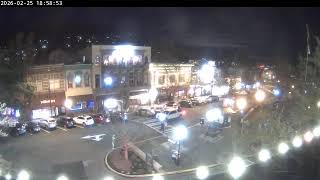
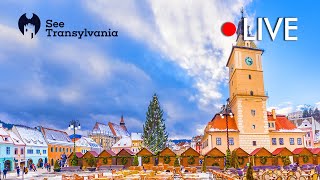
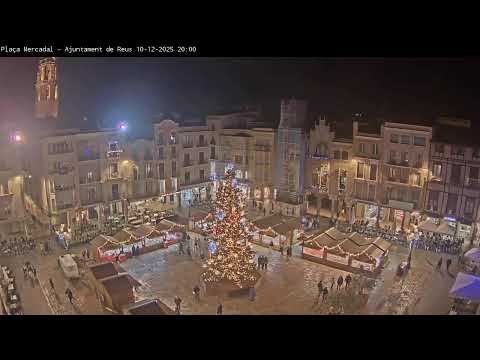
This live camera overlooks the Plaça del Mercadal, the central square of Reus, a city of roughly 100,000 residents in the province of Tarragona. The space is surrounded by arcaded façades and lined with café terraces, while the tower of the Prioral Church of Sant Pere stands prominently nearby. Parts of the square may also show ongoing restoration work. Reus is widely recognised for its connection to Catalan Modernisme, the architectural movement closely linked to Antoni Gaudí, who was born here in 1852. Across the city, particularly around the historic centre, there is a strong presence of late 19th and early 20th century Modernista buildings that contribute to its distinctive character. Historically, the Plaça del Mercadal has been the focal point of civic and commercial life since medieval times, originally operating as the main marketplace. Today it continues to function as the social core of the old town, with steady daytime activity and a lively atmosphere in the evenings as people gather at the surrounding terraces.
Reus, Tarragona, Spain
 ES
ES- Reus, Tarragona
- Reus, Spain
Reus serves as the capital of Baix Camp within the Camp de Tarragona comarca of Catalonia, Spain. Situated in the northeastern part of the Iberian Peninsula, it functions as a significant administrative and cultural hub for the region. The city is located near the Costa Daurada, positioning it as a gateway to the coastal resort towns of Salou, La Pineda, and Cambrils. Its geographic setting has historically influenced its development as a commercial center connecting inland areas with Mediterranean trade routes.
The origins of Reus are debated, with theories ranging from Latin roots describing convict prisoners to Celtic terms meaning crossroads settlement. Robert d'Aguiló repopulated the area around 1150, and the town received official status in the late twelfth century under the archbishopric of Tarragona. It gained continental importance during the Phylloxera plague when vineyards were destroyed, leading to a shift toward spirits production. The city experienced significant growth in the eighteenth century, becoming the second largest in Catalonia before being overtaken by Tarragona and Lleida.
The city is renowned for its extensive collection of Catalan Modernist architecture, featuring works by Lluís Domènech i Montaner and Pere Caselles i Tarrats. Notable edifices include Casa Navàs, Casa Rull, and the Institut Pere Mata, a modernist psychiatric hospital. Although Antoni Gaudí was born in Reus, no buildings designed by him exist there; instead, the Gaudí Centre honors his legacy. Other landmarks include the Castell del Cambrer, the Campanar de Reus, and the Town Hall, reflecting the city's rich architectural heritage.
Reus hosts several festivals, including Sant Pere on June 29, declared of National Touristic Interest, and the Carnival. The city is a center for rock climbing and commercial activity, attracting tourists from Russia, France, and Holland. Visitors explore the historic center, visit museums like the Museu Salvador Vila-seca, and enjoy local gastronomy. The proximity to PortAventura World enhances its appeal as a tourist destination, with tour companies operating services from nearby coastal resorts to the city.
The population of Reus is 111,601 as of 2025. The economy has shifted from its historical role as a major liquor and vermouth production center to tourism and commerce. Access is facilitated by Reus Airport, which receives low-cost flights from European and North African locations, and by train connections from Barcelona and Tarragona. The city features a hot-summer Mediterranean climate with mild winters and hot summers, making it accessible year-round for visitors seeking cultural and recreational experiences.
 The EARF Engine